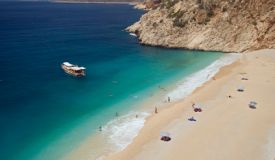
Kaputas Beach, Kalkan
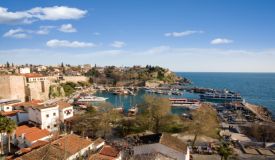
Antalya Old Harbor
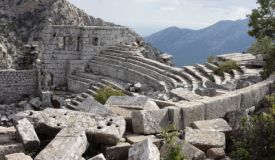
Mountaintop ruins of Termessos
Antalya is where the mountains meet the sea. The Mediterranean coast here is not a flat strip of beach, it is a wall of pine-covered cliffs, Roman ruins tucked into valleys, and ancient cities built on hills so steep you wonder how they carried the stone up. The city itself has a Roman harbor, a restored old town of Ottoman houses, and two long beaches in opposite directions. Behind it, the Taurus mountains rise to 3000 meters. You can swim in the morning and be in the snow before dark. Not many places offer that.
The Mediterranean coast offers superb scenery through the mountains and forests, beautiful beaches and great Roman, Lycian and Pisidian cities hidden in the mountains or ancient harbour towns located right on the beach.
The area between Fethiye and Antalya is more dense in historic ruins and the mountain and forest scenery is more remarkable. The East coast from Antalya to Alanya offers sand beaches, Aspendos and Perge and Side major Roman ruins.
The city has spread. Twenty years ago, Antalya was Kaleici, Lara Beach, Konyaalti, and the road between them. Now the suburbs stretch for 40 kilometers east and west. But the good news: the tram network has expanded. The old town is still walkable, the beaches are still clean, and the airport now has direct flights from dozens of European cities, not just seasonal charters.
The main change is the coastal road between Antalya and Kas. It has been widened and resurfaced. The drive is faster, but you will miss fewer turnoffs to the small coves and ruins. Taxi fares from the airport have gone up, but the tram now reaches closer to Kaleici. If you are staying at Lara Beach, you still need a car or a taxi.
Side and Belek have gone fully upmarket. Belek is now strictly golf resorts and all-inclusives, Side has a pedestrianized old town but the approach road is as crowded as ever. For a quieter experience, stay in the villages between Kas and Kalkan.
Kaleici is the Roman heart of Antalya — a small peninsula surrounded by walls and a Roman harbor. The harbor is full of excursion boats and restaurants, but the streets behind it are still cobblestone, still shaded, still full of Ottoman houses converted to hotels. You can spend a day just getting lost in Kaleici. Hadrian's Gate marks the entrance. The Hidirlik Tower at the southern tip gives you the view.
Lara Beach is east of the city, long and sandy, lined with large all-inclusive resorts. The sand is better than the pebble beaches west of the city, but the hotels are massive. If you want poolside vacation with children, this is where you go. If you want local life, stay in Kaleici instead.
Konyaalti Beach is west of the city, pebbly but backed by a long promenade with cafes and parks. The beach is less crowded than Lara because the pebbles deter some visitors, but the water is clear and the view of the mountains is better. The Antalya Aquarium is at the eastern end of Konyaalti.
Termessos is the one you should not miss. It is a Pisidian city built on a mountain at 1000 meters, inside a national park. The approach road winds through pine forest, and the site is so large that you can walk for hours without seeing another person. The theater has a view down toward the Mediterranean. Unlike Ephesus, Termessos has not been restored. It is ruinous, wild, and unforgettable. Wear hiking shoes.
Perge and Aspendos are east of Antalya, closer to the city. Perge is a flat Roman city with a long colonnaded street and a well-preserved stadium. Aspendos has the best preserved Roman theater in the world, you can still sit in the top row and hear a coin drop on stage. Both are easy half-day trips from the city.
Side is further east, a Roman city built on a small peninsula, now a tourist town. The theater is large, the Temple of Apollo is photogenic at sunset, and the town is full of shops and restaurants. It is worth visiting but crowded.
If you have a car, drive west from Antalya toward Kas. The road hugs the coast, passes through Demre (St. Nicholas church), and climbs above the turquoise water. Kas is a small town built on a hillside, full of pensions and dive shops. The sunken city of Kekova is visible from a boat trip. Kalkan is a former fishing village turned boutique town. The real beauty here is the empty coves and the mountain views, not the towns themselves.
Olympos and Çıralı are on the coast between Antalya and Kas. Olympos has ruins overgrown with vegetation, a treehouse backpacker scene, and the Chimera flames, natural gas vents that burn on the hillside. The flames have been burning for thousands of years. You hike up at sunset. It is worth it.
Phaselis is a Lycian city built on a small isthmus, with three small harbors and a forest growing through the ruins. The water is clear and you can swim at the ancient harbor beach. Combine Phaselis with a stop at the Olympos cable car for the view from the mountain.
May, June, September, and October are ideal. The sea is warm enough, the air is not oppressive, and the crowds are smaller than July and August. May and June are green, with wildflowers in the mountains. September and October have the warmest sea temperature.
July and August are hot — often above 35°C — and the beaches are packed. Air conditioning is essential. Most indoor sightseeing happens in the morning. If you are staying at a beach resort with a pool, the heat matters less.
April can be rainy and the sea is still cool, but the mountains are green and the waterfalls are full. Winter is mild temperatures around 15°C, though some days are quite chilly, and the city is quiet. Many coastal restaurants close, but Kaleici stays open.
Antalya Airport is 15 minutes from Lara Beach, 25 minutes from Kaleici. The tram connects the airport to the city center but does not go directly to most beach hotels. A taxi to Kaleici costs roughly 250-300 Turkish lira; to Lara Beach, about the same; to Konyaalti, a bit more.
The bus station (otogar) is north of the city, connected by tram. Long-distance buses from Istanbul take 12 hours. Fly instead unless you are on a tight budget.
There are many tour packages which include major sights of Antalya. The tours depart Ankara or Istanbul and can be anywhere from 6 to 14 days as part of a Turkey tour. Please see our tour page for all tours in this region and around Turkey.
The tram is the best way to move along the coast between the city center, Konyaalti, and the airport. It does not go to Lara Beach. For Lara, you need a bus, taxi, or rental car.
Dolmus, shared minibuses, run frequently between Antalya, Side, Belek, and Alanya. The fare is cheap, the schedule is flexible, and you will not get lost. They stop anywhere you wave them down.
If you want to explore Termessos, Olympos, the mountain villages, or the coast west of Kas, rent a car or join a day tour. Taxis to these places are expensive and difficult to arrange for the return trip.
For families, the all-inclusive resorts on Lara Beach are efficient but anonymous. For couples, Kaleici is better. For adventurers, the coast between Kas and Kalkan. Antalya gives you options. Pick the one that matches your trip.
Day 1 — Kaleici and the Old City: Start at Hadrian's Gate, walk through the old streets to the Roman harbor. Lunch in the harbor. Afternoon at the Antalya Museum with a statue collection. Evening walk along Konyaalti promenade for sunset.
Day 2 — Perge, Aspendos, and Side: Morning at Perge, the flat Roman city. Lunch at a roadside restaurant. Afternoon at Aspendos theater, then late afternoon at Side's Temple of Apollo at sunset. Dinner in Side or back in Antalya.
Day 3 — Termessos: Drive to Termessos early, before the sun heats the mountain. Hike the site. The theater view alone is worth the trip. Afternoon at a beach or back in Kaleici. This is a full day; bring water and snacks.
Day 4 — West Coast: Phaselis, Olympos, Chimera: Drive west to Phaselis, swim at the ancient harbor. Continue to Olympos for lunch. Hike to the Chimera flames after sunset. Return to Antalya late — or stay overnight in Çıralı.
Which part of Antalya should I stay in?
Kaleici (the old city) is best for atmosphere, narrow cobblestone streets, Roman harbor, boutique hotels. Lara Beach has long sandy beaches and large all-inclusive resorts. Konyaalti has pebble beaches and a long promenade with cafes. For families with young children, Lara is easier. For couples who want to walk to restaurants, Kaleici is better.
How many days do I need in Antalya?
Three days minimum, one day for Kaleici and the old harbor, one day for Perge and Aspendos, one day for Termessos or a boat trip. Five days allows you to add Side, Alanya, or a day in the mountains. A week lets you base here and explore the whole coast from Fethiye to Alanya.
What is the best time to visit Antalya?
May, June, September, and October are ideal, warm enough for swimming, not too hot for sightseeing. July and August are very hot and crowded. April can be rainy but the mountains are green. Winter is mild and quiet; many coastal restaurants close but Kaleici stays open.
Should I rent a car in Antalya?
If you are staying in Kaleici or a beach resort and only taking organized tours, you do not need a car. If you want to explore Termessos, the mountain villages behind the coast, or drive the coast to Kas and Kalkan, a car is essential. Taxis to Termessos from the city are expensive and difficult to arrange for the return trip.